
The first time I visited London as a tourist I stayed 2 weeks, and there is so much to see in the city itself that I did not feel the need to explore. But if you are a repeat visitor, or planning to stay a bit longer, or quite simply want to try something different, there are plenty of cities you can visit from London by train for the day
London’s train stations
London has plenty of train stations, so some of the trips I recommend may be easier or take longer depending on where in London you are staying.
If you arrive into London with the Eurostar, you will already be familiar with St Pancras International. At the end of the building, there is another station also called St Pancras, offering domestic services. Confusing, right?
Now, just around the corner from St Pancras international is another station, called King’s Cross. If you are coming by underground, pay attention because there is a metro station called Kings Cross St Pancras serving all three train stations! Don’t worry, there is plenty of signage around.
Other stations in central London are Paddington, Marylebone, Waterloo, Stansted, London Bridge, and Victoria. They all serve specific regional routes, but very often services to a specific destination will leave from two stations, which is great because it gives you more options.
To book my tickets, I use Trainline. it means I can plan in advance and get the best deals. Train travel in the UK is not as affordable as in other European countries, so booking in advance is the best way to stay within budget.
12 easy day trips from London by train
The 12 destinations in this article are all under two hours from London by train, so ideal for a day trip:
- Oxford
- Cambridge
- Canterbury
- Windsor
- Hampton court
- Brighton
- Bournemouth
- Salisbury
- Winchester
- Bath
- Lille
- Brussels
1. Oxford
The honey-coloured stone buildings of the city of spires are only 1 hour by train from London Paddington and London Marylebone.
Founded in the 12th century, Oxford University is one of the oldest in Europe. Over centuries, it has shaped England’s cultural identity, attracting some of the world’s best minds.

Many of the university’s beautiful colleges are open to visitors, for a small fee. Amongst the most ancient, Merton College, where J.R.R. Tolkien taught English literature for decades, with a beautiful Gothic chapel and enchanting green spaces. Christ Church College, boasts a grand dining hall (used in the Harry Potter films) and a tower built by Christopher Wren. The high walls of Magdalen College enclose a Vast deer park. Despite the name, New College has medieval cloisters and a chapel with some stained glass windows designed by Joshua Reynolds.

While not strictly a college, I also recommend a visit to the Bodleian Library, one of the world’s great libraries and an iconic building.
The Ashmolean Museum. houses a world-class collection of art and artifacts, and regularly hosts great exhbitions.
Oxford is home to incredibly old pubs – some have medieval origins! Dark and cosy, The Bear Inn claims to be the oldest, with records dating back to 1242,
Punting on the river Cherwell is another way to the experience the Oxbridge vibe, although punting is more traditionally associated with the next destinaiton on this list.
2. Cambridge
trains to Cambdrige depart from Liverpool Street, Kings Cross and St Pancras International. The slowers services take one and a half hour, the fastest 40 minutes.
Like Oxford’s, Cambdridge’s history is the history of its university. Founded in the 13th century. As colleges sprung up along the banks of the Cam, the city grew around them.

Amongst the most remarkable is the majestic King’s College, whose beautiful Gothic Chapel is a symbol of Cambridge. Its beautiful grounds stretch down to the River Cam. Another riverside wonder is Trinity, the largest of the colleges. Its Wren Library (built by Christopher Wren) boasts an incredible collection of rare books and manuscripts, displayed on rotation. St John’s is another grand college with extensive grounds. One of its unique architectural features is the Bridge of Sighs, a covered bridge spanning the Cam. Gonville & Caius College is famous for its three gates, each representing a different stage of life. It also has beautiful gardens.
As mentioned above, the name of Cambridge evokes images of punting. A punt is a small boat you use to glide along a waterway, helping yourself with a long stick. It is a traditional Cambridge pastime and a wonderful way to admire the colleges from the water.
If it rains or punting is not your thing, the Fitzwilliam Museum houses a diverse collection of art and antiquities from around the world. Or climb up the tower of Great St Mary’s Church rewards you with panoramic views of the city.
Another highlight is the University Botanic Garden, an oasis of greenery and tranquility. The most unique Pub in Cambridge has to be The Bath House, built on the ruins of Roman Baths! the riverside Fort St George is also delightful, and you can watch Punts go by.
3. Canterbury
Just One hour from st Pancras International or London Victoria, Canterbury feels light years away from the hustle and bustle of London.
The arrival of St. Augustine in the 6th century shaped the city’s destiny. Canterbury Cathedral is built on the site of St Augustine’s original monastery. Canterbury became the seat of one of England’s two archbishoprics. after the murder of Archbishop Thomas Becket in 1170, the city became a great pilgrimage centre. Devouts came to pray on Becket’s shrine, or stopped in Canterbury before setting off for Rome on the ancient Via Francigena.
Canterbury remained an important cultural centre during the Renaissance and the Reformation. It is a city that keep reinventing itself. Nowadays its independent stores, craft breweries, and restaurants focused on locally grown produce make it a delightful break.

the Cathedral, a UNESCO World Heritage Site, is the jewel in Canterbury’s crown – a book of stone whose complex architectural draw you in and keep you in a costant state of wonder, as you discover uniqe sites such as the 12th-century crypt, and admire the intricate stained glass windows.
The rest of the city is no less interesting . From the medieval city gate, to the Stour riverside, from St Augustine’s Abbey to the many cobbled streets and half-timbered houses, Canterbury is a real medieval wonder, but full of live and rooted in the present too – just a slower, more peaceful present than London! Check this post to design your itinerary.

4. Windsor
This historic town is Only 40 minutes from London Paddington – and about 1 hour 30 minutes from Waterloo.
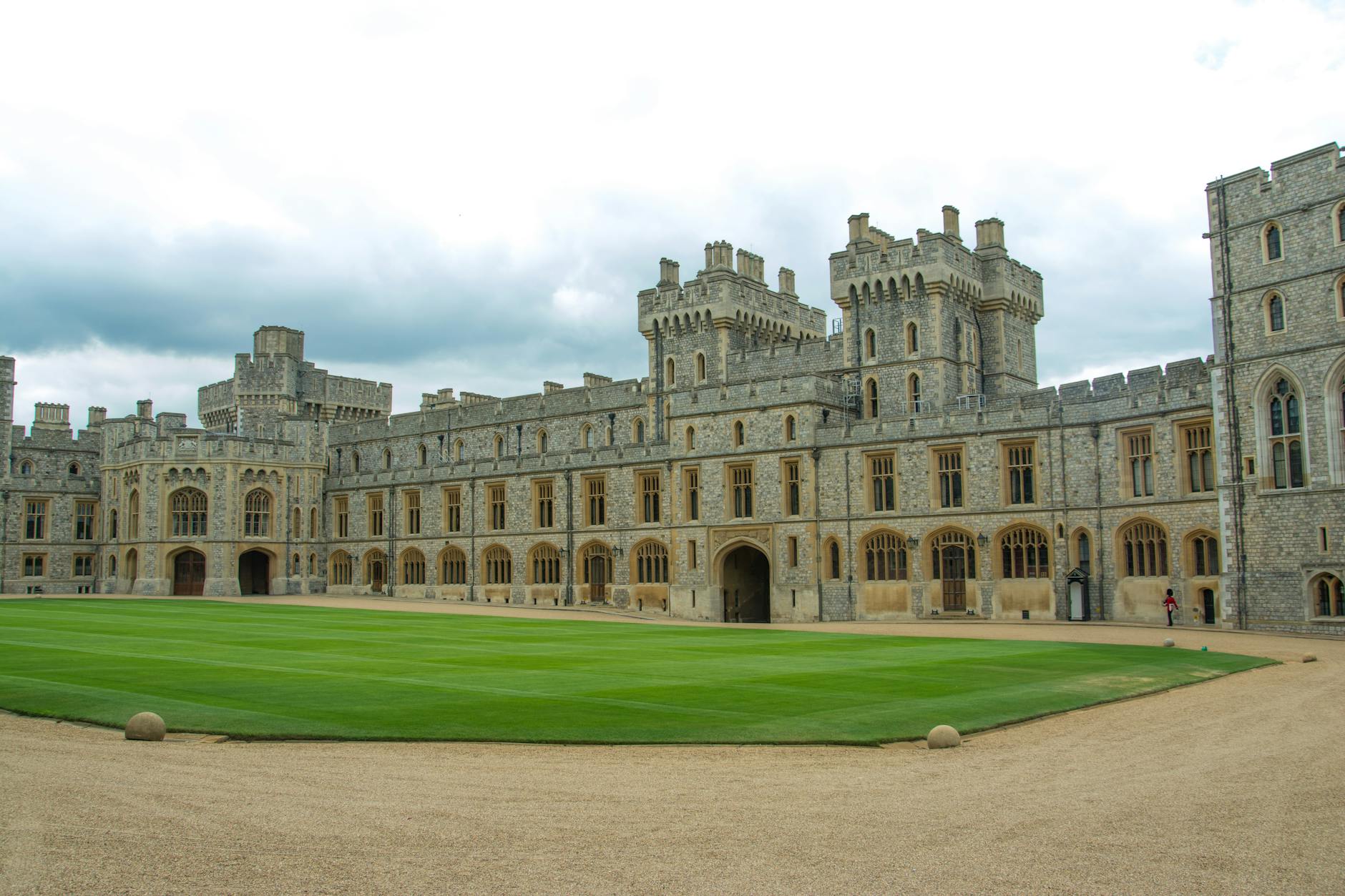
The centre of windsor, with its ancient houses, cobbled streets, Historic pubs and Charming tea rooms, would be reason enough to visit. On top of that, Windsor is home to the most historic of English royal residences.

The name says it all. Windsor Castle is not a Palace – it is a fortress. Its foundations were laid by William the Conqueror, and it has been a royal residence ever since. Over the centuries, generations of monarchs have left their mark on its architecture and interiors. You can visit The State Apartments, used by members of the royal family for official engagements, with decor and furnishing from different ages, and admire soem of the great works from the Renaissace and Baroque eras in the Royal Art Collection. The austere St. George’s Chapel is the final resting place of monarchs such as Henry VIII and Charles I. an annex to the chapel has become the family mausoleum of the late queen Elizabeth’s family – her parents, husband and sister are all buried there.
Outside the castle, make time to explore the quaint cobbled streets of the city centre, soaking in the beauty and the royal vibe, and stop for lunch at one of the delightful historic pubs. A walk through the beautiful green expanse of Windsor Great Park is a grear way to walk off the calories!

5. Hampton Court
Hampton Court is 40 minutes away from London Waterloo.
While Windsor Castle has been changing with with history for a thousand years, Hampton court Palace will wisk you straight back to the court of the Tudor or Stuart Kings.

Originally built by Cardinal Wolsey, it was expanded by Henry VIII, who wanted a place to reflect his power and status. you can still visit Henry VIII’s Apartments. including the Great Hall, the Chapel Royal, and the kitchens that fed his appetite! Subsequent monarchs added their own touches. The Baroque apartments of William and Mary designed by Christopher Wren will dazzle you with their lavish interiors.
The exterior of Hampton court is truly magical. In the magnificent gardens you will find the famous Hampton Court Maze. A very old and Great Vine is a reminder of times when wine was produced at Hampton court!

If you need a spot for lunch or tea, stroll along the river towards the village of Hampton with its lovely eateries and cosy vibe.
Speaking of the river, the Thames Path is a riverside walk that connects Hampton Court with the east of London and the Docklands. Even walking a short stretch gives you a great feel for it. Ancient trees and wilde stretches alternate with grand mansions and pretty Villages. You can to stay on the north side of the river, or cross the bridge and walk along the south side instead.
6. Brighton
Brighton is 1 hour from London Victoria or London Bridge
With an iconic pier stretching out into the sparkling sea, a long pebble beach. and a vibrant atmosphere, Brighton is a great day out from London.

In the 18th century, the Prince Regent (later King George IV) fell in love with the then fishing village and commissioned the construction of the extravagant Royal Pavilion. This flamboyant palace, with its distinctive domes and minarets, became a symbol of Brighton’s Regency heyday,
Queen Victoria also loved spending time in Brighton. After falling out of fashion in the second part of the 20th-century, the city has had a renaissance in the last couple of decades. The quirky independent shops, especially in the maze of narrow streets called the Lanes, are testament to its city’s vibrancy and creativity, and the food scene is one of the best in Britain!
7. Bournemouth
If you prefer sand to pebbles, Bournemouth’s powdery golden beach is only a couple of hours from London by train.
Visitors started to flock to Bournemouth during the Victorian era, attracted by its stunning beach, sheltered location and mild climate. It soon had a classic Pier, elegant promenades, and a string of grand clifftop hotels overlooking the sea.
with its umbrella pines and luxuriant vegetation, Bournemouth feels like a world away from London. Take time to enjoy its treelined roads, and explore the Bournemouth Gardens, an oasis of greenery in the heart of the town. before reaching the beach.
If the weather is nice, take a long stroll on the sands and soak in the retro atmosphere of the pastel painted Beach huts. Or just relax on the sand. In summer, the water is the warmest I have found in England, so you can even have a swim!

There is a scenic coastal walk, part of the South West Coast Path. The section from Bournemouth Pier towards Hengistbury Head offers breathtaking views of the coastline and the Isle of Wight. It takes two hours to walk the full distance, but you can go as far as you feel is ok for you and then head back. If the weather is not great, explore the eclectic collection of the Russell-Cotes Art Gallery & Museum, housed in a beautiful cliff-top mansion.
Food is a treat in Bournemouth. There are plenty of options in the centre. If you are looking for a venue with a view, head to one of the clifftop Hotels.
8. Salisbury
One and a half hours from London Waterloo is another of Englad’s great cathedral cities: Salisbury.
Salisbury was born as Old Sarum, an iron age fort that became a cathedral city, settled by the the Anglo-Saxons and the Normans. In the 13th century, the local bishop decided to build a new cathedral. Instead of re-using the same site, he decided to move it to a different location, with better access to water and a more defensible position. the current Salisbury was born around the new church. It prospered, and you can still admire its medieval character today!
Salisbury’s skyline is dominated by the towering spire of its Cathedral, the tallest in England. Built over a relatively short period of 30-years, Salisbury cathedral is a great example of early gothic style, stained glass windows reflect the light on the stone walls and paving, and the intricate fan vaulting accentuates the elegance of the nave. In the Chapter House is one of the four surviving copies of Magna Carta.

The Close, the historic area surrounding the cathedral, retains an atmosphere of days gone by, with beautiful period houses and gardens. such as 18th-century Mompesson House.
If you have time, you can still visit the settlement at Old Sarum, where it all began! The walk takes 1 hour each way. Salisbury is also the ideal base to visit Stonehenge. There are buses from the station a few times a day. Alternatively, you can book a Stonehenge tour including a coach trip.

9. Winchester
Just One hour by train from London Waterloo, Winchester provides an escape into a world of magnificent cathedrals, charming streets, and surprising history.
Winchester rose to prominence under the Anglo-Saxons, when it became the capital of the kingdom of Wessex and later the first capital of England! When I first visited, I noticed that The city centre is completely surrounded by hills, so it lies in a circle, or within a crown? Was this was persuaded the Anglosaxons to make it their capital? I have not found evidence anywhere, but it is a thought.
while eventually the power shifted to London, a wealth of medieval buildings reminds the visitors of its former glory.
The Cathedral is one of the largest cathedrals in England. and its austere interior is a thing of beauty, and peace. Winchester Castle, the former royal residence, is another wonderful site. Dont’ miss the Great Hall, home to the Round Table. of Arthurian legends. the City Museum is excellent and a great way to learn about Winchester’s history. I also love the ruins of Wolvesey Castle, once the residence of the Bishops of Winchester.

10. Bath
This historic city, nestled in the rolling hills of Somerset, is one and a half hours from London Paddington.
The very name of Bath conjures images of elegant crescents, Roman ruins, and the sparkling prose of Jane Austen.
Bath owes its origins – and its name! -to the hot springs that drew the Romans to the area. Aquae Sulis, as the settlement was called back then, became significant. You can still appreciate it when visiting the well-preserved Roman baths.

Next door to the Roman Baths is Bath Abbey, Bath’s magnificent one-time medieval cathedral.

In the 18th century, when High society began to ‘take the waters’, Bath became a fashionable resort. The elegant Georgian architecture that defines the city today, with its crescents, squares, and grand buildings, is from that era.
It is virtually impossible to visit Bath and not think about to Jane Austen. She lived in Bath for several years, and the city, its residents, and their social rituals, feature prominently in her novels. The Jane Austen Centre immerses you in the life and work of this ground-breaking writer.
11. Lille
Thanks to the Eurostar, it takes the same time to go to Lille in northern France than to go to Salisbury – 2 hours!
Founded in the Middle Ages, Lille flourished as a major trading centre, but changed hands several times – belonging first to Flanders, then to Burgundy, Then Spain, and finally to France. The city’s architecture reveals the complexity of its past. You just need to stroll through the Grand Place, where historic Flemish buildings such as the the Vieille Bourse (Old Stock Exchange) stand proudly behind the classic french style of the Théâtre du Nord. The square is large and bright, a lovely spot for a stroll or a drink in the sun on a good weather day.

Vieux Lille (Old Lille), with cobbled streets and colorful Flemish houses, is perfect for a traditional Flemish carbonnade (beer stew). The many independent shops and art galleries exude an elegant and creative vibe. Lille is also home to the Palais des Beaux-Arts, one of the largest fine arts museums in France, whose diverse collection goes from European masters to contemporary works – Van Dyck, Rubens, Delacroix and Rodin to name a few.
Other architectural highlights include the Citadel, considered the masterpiece of the military architect Vauban, and the Gothic former ducal palace of the Dukes Burgundy (Palais Rihour)
12. Brussels
The train journey between London and Brussels is exactly 2 hours!
While the Belgian capital does deserve more than 24 hours, if your time is limited a day trip to Brussels is eminently possible.
From its humble beginnings as a small settlement on the banks of the Senne River, Brussels grew into the capital of the Duchy of Brabant and later the seat of the Habsburg Netherlands. Its strategic location in the heart of Europe contributed to its enduring prosperity. the fascinating city we see today nonchalantly blends medieval grandeur, Art Nouveau elegance, and striking contemporary buildings.
the beating heart of Brussels is the UNESCO-Heritage-Listed Grand Place (Grote Markt), with its stunning guildhalls, the Town Hall, and the King’s House. and the beloved statue of the Manneken Pis.

Around the corner are the 19th-century Galeries Royales Saint-Hubert, a beautiful shopping arcade. and the magnificent Gothic Cathedral of St. Michael and St. Gudula.
No visit to Brussels is complete without tasting some delicious Belgian food, be it moules-frites, a hearty stew, or a delicious waffle. Rue de Bouchers is considered an Epicurean paradise.
You can walk off your meal by visiting the EU quarter – 30 minutes from Grande Place – or catching a tube to the Atomium, for incredible views of the city. The Parc de Bruxelles is a relaxing green haven in the heart of the city.
You must be logged in to post a comment.