
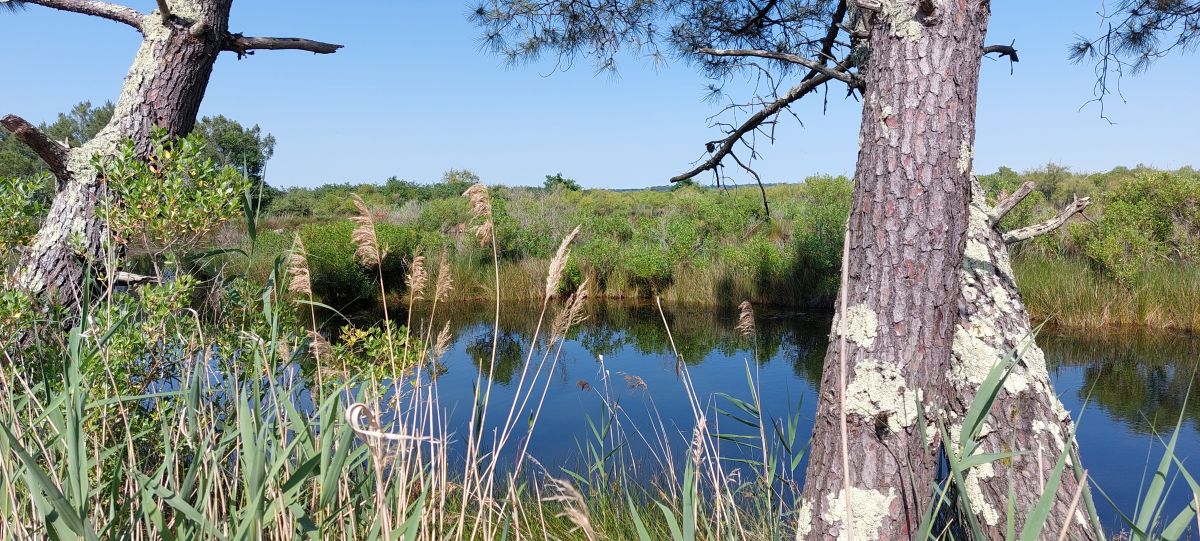
Over the last two summers, I have become very fond of the French Atlantic Coast. Stretching from the sandy beaches and historic seaside towns of Normandy, to the wonder of Mont Saint Michel, to the rugged cliffs of Brittany, down to the sun-soaked surf of the Basque Country, this part of France is as breathtaking as it is varied. As it faces southwest, it also rewards you with some of the most incredible sunsets you will ever witness.
There are so many destinations to choose from, and they all have their own unique beauty. If you love swimming in tranquil and warmer waters, the Bassin d’Arcachon, west of Bordeaux, is one of the area’s absolute gems. This corner of Nouvelle Aquitainie, with its unique microclimate and protected waters, creates an ideal environment for wildlife, water sports, and, famously, oyster cultivation. With attractions ranging from the elegant 19th-century architecture of Arcachon ville, to many beautiful nature reserves, to the tallest sand dune in Europe, and some of the bluest waters I have ever seen, this is a part of the world that truly has it all. And yet it retains a laidback charm.
Here are ten highlights of this incredible part of France!
Ten unmissable sights in the Bay of Arcachon
1. the “Ville d’Hiver” in Arcachon town
Our friendly host had strongly recommended a visit to Arcachon town, and I am grateful he did. Archachon is made of two architecturally and geographically distinct areas, the hilltop Ville d’Hiver (Winter Town) and the seaside Ville d’Été (Summer Town).
The Ville d’Hiver, dominating the bay, is a journey back in time, to the age of Proust or Napoleon III. Its elegant 19th-century villas, surrounded by lush gardens, are often unique in style, a testament to the personal architectural tastes of their wealthy owners. You have houses in Moresque, Gothic, and even mountain chalet style!

The Winter Town is actually built over 2 hills, Saint Paul and Sainte Cecile. They are connected by a metal walkway (Belvedere), from where you experience a sense of full immersion in the lush vegetation!

On the top of the Saint Cecile Hill is an observatory, which offers great views of the whole bay.
Between the Winter and the Summer towns lie the lush Parc Mauresque: a beautiful, landscaped park with exotic trees and fountains,
2. The Ville d’Été in Arcachon town
I also enjoyed the seaside Ville d’Été (Summer Town), which is nearest the beach. It has a more typical beach resort vibe, with a promenade, beachside restaurants, a jetty, and a marina, where you can board boats to Cap Ferret across the bay or to the pristine Isle des Oiseaux nature reserve.

3. Le Moulleau

From Arcachon, you can walk along the beach all the way to Le Moulleau,
Here, a 19th-century chapel (Notre Dame des Passes) built on a sandbank overlooks a pretty district of seaside restaurants and cafes, curled around a powdery sandy beach. It became a fashionable retreat for high society and bohemian types, such as the Italian writer Gabriele d’Annunzio, who spent 5 years in Le Moulleau before WW1.
It is one of the most panoramic points of the bay. With one sweeping gaze, you can take in the Cap Ferret lighthouse opposite, as well as the outline of Nouvelle Aquitanie’s ultimate natural wonders, the Dune du Pilat.

4. Forest and beach of Pyla
Not to be confused with ‘Pilat’ (the dune), Pyla is an upmarket seaside resort between Arcachon and Le Moulleau. It is backed by a magnificent forest. We walked to Le Molleau on the beach and returned through the back road, walking under the canopy of magnificent coastal trees.

The tide was low, and the landscape felt like a meeting of natural elements: sand, water, and sky, framed by the silhouettes of the trees.

5. The Dune du Pilat
Where do I begin?
The Dune du Pilat is one of the most magnificent natural sights in Europe, and I would argue in the world.
At over 100 metres, is the tallest sand dune in Europe, and 2.7 kilometres long. But it isn’t just its size that makes it so spectacular; it is its setting.
You reach it by walking through native woodland, which suddenly stops and is replaced by a mountain of sand.

The climb to the top of the Dune du Pilat is steep, and it is only when you reach the top that you realise how immense the dune actually is, stretching for kilometres all the way into the horizon.
The feeling of being on the dune is magical. Every step you take changes the shape of the dune, which is also constantly modified by the power of wind and, at times, by the rain. You feel like you are walking on impermanence itself!

At the top, you will also experience another dramatic colour shift. The dune in front of you drops as quickly as it had risen, and the yellow gives way to the blue of ocean and sky.

And in the middle of the blue, lies another wonder, the Banc d’Arguin Sandbank.
The Dune du Pilat site is extremely well organised and has plenty of information and guidance for visitors. It is open 24 hours, so you can catch a sunset there if you time your visit well.
If I can offer a piece of advice, I will share what a friend said to me before I went. If you go in summer, go early or late in the day to avoid the heat. You will be ok while you walk from the car park (which has plenty of tree cover) and through the forest, but climbing to the top of the dune in midday summer heat is not for the faint-hearted.
6. Bank d’Arguin Sandbank

When looking down from the top of the Dune du Pilat, you notice a long golden sandbank stretching across the water. It is the Banc d’Arguin, a desert sand island at the entrance to the Arcachon Bay. Like the dune, it is constantly changing and shifting, It is 4 km in length and 2 km in width at low tide, and much smaller at high tide. This magical and fragile environment has rightly been transformed into a nature reserve.
You can approach it by boat, as do tourists on tours and oyster farmers. But from sunset to sunset you have to leave it alone!
7. Plaines du Teich
Our accommodation was in Le Teich, between Arcachon and Cap Ferret. The Teich area boasts a beach (Plage du Sentier du Littoral). On our first day back on the Atlantic, I really fancied a swim. But I failed to take account of the tides. By the time we parked our car and walked to the plage, our beach was pretty much submerged! That didn’t stop us from enjoying the incredible beauty of the area.

The Teich boasts two nature reserves – the Ornithological Reserve and the Plaines du Teich. As we did not have time to visit both, we chose the Plaines du Tech.. It is not a fully natural landscape, in the sense that it has been shaped by humans since the 1770’s. But the purpose of human intervention was to turn the salt marshes back into a ‘natural’ landscape of marshland, meadows, and reedbeds to become a safe place for coastal flora and fauna to prosper. And they have certainly achieved that.

The reserve includes the delta of a river, the Eyre. A hike through it feels like a journey through a timeless landscape of birds. fish, amphibians, and coastal mammals. I had never seen so many wild swans, clearly happy and prospering, undisturbed in this peaceful environment.

8. The oysters shacks
The Bay of Arcachon is famous for its oysters, which you can sample, freshly farmed, from oyster shacks, accompanied by local white wines. Whether you eat oysters or not, it is a cultural experience and the villages are incredibly fascinating in their colourful simplicity.

Places like Andernos-les-Bains, L’Herbe, Le Canon, and Piraillan on the Cap Ferret peninsula, or Gujan-Mestras on the southern shore, offer a glimpse into the traditional life of oyster farmers.
We stayed near Gujan-Mestras, and we made it our evening hangout spot. Known as the “oyster capital” of the bay, this coastal hamlet has a number of oyster ports and a lovely canalside promenade constellated with oyster shacks that feels rustic and authentic.

9. Cap Ferret
Directly facing the beach of Arcachon, the headland of Cap Ferret, dominated by its lighthouse, is one of the most iconic images of the magic of Arcachon Bay.
You can drive there (avoid summer weekends as the coastal road can get incredibly busy) or catch a boat from Arcachon.

From the top of its 53 metres, you can catch a magnificent view of the oyster farms, the Île aux Oiseaux, the Dune of Pilat, and the Atlantic Ocean.
You can relax on the beaches, go for a swim, or explore some of the delightful seaside oyster villages such as l’Herbe.

10. île aux Oiseaux
Ile des Oiseaux literally means ‘Bird Island.’
To be perfectly honest, I don’t think it really qualifies as an island – it barely rises from the sea water!
But it is another unique ecosystem in Arcachon Bay. Many species of birds live there, either year-round or as part of their migratory lifestyle. As for the flora, the Île aux Oiseaux’s wetlands boast the only salt meadows on the Atlantic Coast, which have never been touched by human intervention.
The island is also famous because it is home to fifty or rustic wooden cabins, and when I say rustic I mean it. They have no running water or electricity, and the nearest grocery store is several kilometres away by boat when the tide is favourable. For the right kind of person, it is a definition of paradise.

If you are not so adventurous, you can still experience the island’s beauty. Just book a boat trip from Arcachon- many are done on traditional pinasses (oyster fishing boats) – and discover another of the wonders of Arcachon Basin.

My stay in Arcachon was one of the highlights of last summer. If you have the opportunity, go and explore this magnificent part of France’s Atlantic coastline.
Did you enjoy this post? Subscribe to my blog or follow me on social media so you do not miss any post.
You must be logged in to post a comment.